Day Sign Notes: Imix / Imox

David Stuart, The University of Texas at Austin

In a few recent studies I have examined how Maya day glyphs visually transformed over the centuries, becoming reduced or abstracted to the point that their original animate forms were obscured, even for the scribes who routinely wrote them. So far, I have looked at the days Manik’, Men and Caban, showing how they originated as specific deities we can identify in Maya iconography. All of the days began this way, as images of recognizable gods. A larger study now in preparation will aim to explore these deeper origins of the Maya days, and how they relate to the day glyphs in other Mesoamerican script traditions. In assessing these developments over the last year or so, I have become increasingly comfortable with the notion that the 260-day Mesoamerican day-count was perhaps even lowland Maya in origin, invented in the Middle Preclassic, and that the day glyphs and names we find elsewhere in Oaxaca or Central Mexico were borrowed from those prototypes, becoming transformed and abstracted even further (this is how Men, once the Principal Bird Deity, became distilled down to a generic “Eagle”).

Here we look at Imix, the first of the twenty named days of the tzolk’in, and the imagery associated with it (Figure 1). In some respects, Imix seems well-understood – at least better than many other Maya days –  having established connections to water and to aquatic snakes of mythology. But its graphic history, etymology and deeper meanings deserve further reflection.

Figure 1. Standard variants of Imix over time (400 – 1200 CE)
Figure 2. NAAH-KAN, or Naahkan, “First Snake,” a common designation of the Water Serpent.

The day name was Imix in ancient Yucatán, and Imox or Imux still is used among day-keepers in the highlands of Guatemala. In Ch’ol the name may have been Nachan (Campbell 1988, Fox and Justeson, n.d., Kaufman 2020), probably analyzable as naah-chan, “first snake” or “primordial snake.” This word surely corresponds to the hieroglyph that we read as NAAH-KAN which is an integral part of the old name of the so-called Water Serpent. The connection is interesting, for, as we will see, for the Water Serpent was the true visual basis of the Imix sign (Figure 2). It is difficult to know if Imix or Naahchan (or Naahkan) was the name used in the Classic period lowlands, as either seems possible. Cipactli, usually translated as “cayman” or “crocodile,” is the corresponding day name in the Nahuatl system.

The meaning of Imix remains obscure. Its only known appearance outside the day name is in the Books of Chilam Balam, in the names of a set of directional world trees called either imix che’ or imix yaxche’ (Bolles n.d.; Knowlton and Vail 2010, Liljefors Persson 2011; Martin 2006; Roys 1933). In this context, many have translated imix as “abundance” (“abundancia” in Barrera Vasquez 1980). These directional trees, described as “pillars of the sky” (yocmal caan), were each designated by their appropriate color: chak imix che’, “red abundance tree” in the east, zac imix che’, “white abundance tree” (north), ek’ imix che’, black abundance tree (west) and k’an imix che’, “yellow abundance tree” (south). In the world-center (tu chumuk peten) was the yax imix che’, or “green abundance tree.” Roys (1933) noted that this probably refers to the ceiba (yaxche’), which was a symbol of fertility and sustenance. The Diccionario Maya Cordemex (Barrera Vásquez 1980:268) describes the world tree(s) designated by imix as the “origen de la vida.”

Delving into the etymology of the word, I believe that imix and imox may be derivations based on the proto-Mayan root *iihm, “breast.” In Yucatec, im is “breast.” Kaufman (2003) notes the fuller form iimi’iixh as the Mam word for “breast.” The day named Imx is explicitly linked to the word for “breast” in the Mam vocabulary of the Academia de Lenguas Maya de Guatemala (ALMG 2003:47):

Imx. Glándulas mamarias (calendario maya). Imx tb’i jun q’ij toj kyajlab’il qchman. Imx es día sagrado dentro del calendario maya-mam.

A connection to breasts, nursing and sustenance may seem odd at first, but it brings us back to the idea of an “abundance tree” just mentioned. In fact, in Aztec lore, an important cosmological tree was the chichihuacuahuitl, or “breast-tree”, located in the paradise of Tlalocan (the tree name is embedded in the place name Chichihuacuauhco). If imix is indeed derived from “breast,” this would offer a striking parallel to the term imix che’ or imix yax che’.

Figure 3. Flowers of Nymphaea ampla at Cenote Xbatun, Yucatán, and a Classic Maya depiction with Imix element. Photograph by D. Stuart.

The forms of the standard Imix day sign (see Figure 1) show a small inner circle in its upper portion, usually darkened and surrounded by dots, with a series of parallel lines placed below. This has long been recognized as the representation of a waterlily blossom (Nymphaea ampla) as shown in Maya iconography, as first proposed by Thompson (1950:72) (Figure 3). This was discussed at length by Rands (1953) and later by Hellmuth (1987a, 1987b) and Houston and Taube (2011).  In all Imix signs this blossom is oriented downward, with the dark spot representing the flower’s ovaries at the center and the lower parallel lines representing the pedals, pistils and stamen the emerge from it. The outer sepals are never shown in the glyph, but they are apparent in many iconographic representations.

Figure 4. Animate variants of the day Imix (a-c), with (d) showing the Water Serpent merged with the imix element (HA’).

There is also an animated form of Imix, which assumes the form of a serpent’s head with an elongated snout (Figure 4d, Figure 5). In Late Classic examples, the blossom that is the standard Imix sign is the upper part of this serpent’s head. This is so-called Water Serpent (or Waterlily Serpent), as first observed by Eric Thompson (1950:145) (Figure 1e-g). Thompson first referred to this being as the “Imix Monster,” which later came to be called the “Lilypad Headdress Monster” (Hellmuth 1987. :160), the “Waterlily Monster” (Schele and Miller 1986:46), the Waterlily Serpent” (Taube 1992:59) or, as I prefer here, simply the “Water Serpent.”

Figure 5. The Water Serpent, the mythic basis of Imix. Note the waterlily blossom on its headband, and the nibbling fish (Drawing by D. Stuart).

The Water Serpent shows several distinct features, among them a waterlily pad at the forehead, a blossom tied to its front, and a fish biting or sucking at the flower. Often the same fish is shown biting or sucking at the tail of the serpent. Its fishy dorsal “fin” evolved over time to be shown as elongated long quetzal feathers (that is, it came to be a “feathered snake” of the water,  probably also a conceptual relation or antecedent to K’uk’ulkan). Its body can simply be the undulating water band. This important iconography  has been most recently by Coltman (2015), who examined its many connections in Mesoamerica, well beyond the Classic Maya world. In ancient Maya mythology this being was the primordial snake (naahkan) that was the essence of water, and who oversaw the creation and raising of the earth, supported by the four old men, the chantun itzam, at its corners. This role, although not yet well defined in the scholarly literature, is perhaps why he was the first day of the tzolk’in, the source of the world’s first sustenance [Note 1].

Figure 6. The Water Serpent in non-calendrical settings, as HA’ “water,” WITZ’, “splash,” the number thirteen, and (as a variant) HA’B, “year.”

The same Water Serpent head we find as Imix was also used to write HA’ “water” (Figure 6b) and also WITZ’, “sprinkle, splash.” (Stuart 2007, Coltman 2015) (Figure 6c). A similar Water Serpent could also appear as the head for the number “thirteen” (Figure 6d) (Robertson 1990). A certain variant of the Water Serpent showing a dotted volute or spiral on the head was used to write HA’B, “year,” in Long Count dates and Distance Numbers (Figure 6e, f). This latter form never appears as Imix, which always emphasizes the waterlily blossom. These visual differences among various Water Serpent glyphs are subtle but real, and deserve further study, for it is clear that Imix (HA’, etc.) and HA’B took a slightly different developmental tracks (ha’b, “year,” is from ha’, “water, rain, rainy season,” so both the animate signs and the words are related).

One early representation of the Water Serpent at San Bartolo suggests a connection to the imix che’ of the Books of Chilam Balam. On the West Wall, we see a serpent’s body as an undulating water band. From its head emerges a tree that supports the Principal Bird Deity (Taube, et al. 2005) (Figure 7). Given that this portion of the murals is dedicated to directional world trees and year bearers, I suggest this is perhaps a precursor to the imix che’ or “abundance tree” mentioned above.

Figure 7. Depiction of Water Serpent as cosmic tree (imix che’?) from San Bartolo Murals, West Wall. Watercolor painting by Heather Hurst, Proyecto Arqueológico Regional San Bartolo-Xultun.

Thompson reasoned that his “Imix Monster” was a symbol of the earth. In this he was influenced by the ideas surrounding the corresponding central Mexican day named Cipactli, usually translated as “crocodile” or “alligator,” and long considered an earth symbol (Caso 1968:8-9). The Nahuatl word can be applied to a variety of aquatic beasts, including the caiman and the gar. It is important to note that the Maya “Imix Monster” or Water Serpent is never shown as a crocodilian (ayin), only as a watery snake. I suspect that the toothy Cipactli being represents a mythic character with somewhat different associations, and overlaps. As Martin (2009) has noted, crocodiles are important in the Maya iconography of certain world trees of abundance, especially cacao. This takes us back to the imix che’ concept mentioned above. A text from jade vessel excavated in Burial 116 at Tikal refers to the sprouting of a primordial cacao tree on the day 9 Imix, which is probably a symbolic connection to the same idea of earthly abundance and sustenance. The point here is that the Water Serpent was primarily a watery creature, not so much a being of the earth. It nevertheless had strong earth associations revolving around creation narratives and concepts revolving around abundance and growth.

Perhaps implicit in Thompson’s old discussion of the “Imix Monster” was an assumption that it is a visual or conceptual elaboration on the simpler, more common form of the day, the waterlily. Schele noted this relationship more explicitly, in designating the serpent-like head under the Imix and in other examples as the “personification head,” an element used to personify a unit of Maya writing, to give them sacred power (Schele and Miller 1986:44). In this way, the Water Serpent is often considered to be an artistic extension on the “standard” Imix or waterlily, basically its complex head variant. However, I suggest that the relationship is not one of increased elaboration and animation, from simple Imix to complex serpent, but the reverse, from serpent to the waterlily blossom. This involves process that is by now familiar, of visual reduction and simplification, using a part for the whole. The Water Serpent came first as the true essence of Imix, and through scribal practice it came to be simplified and even a bit distorted. Again, this may not be terribly surprising to those who have a deep knowledge of Maya script, but the specific nature of this formal reduction is important to stress, as it pertains directly to how we interpret the nature of the day itself.

Figure 8. Tracking the visual relationship between the Water Serpent and the standard Imix sign, its pars pro toto abbreviation.

As we see in Figures 5 and 8, a diagnostic feature of the Water Serpent is its waterlily pad headband, and large blossom, which is tied to it, protruding outward. usually with a fish nibbling away. Looking at the forms of the Imix day sign, we see the same waterlily blossom is above the serpent’s face. This surely arose form artist-scribes who routinely depicted the serpent with its waterlily. The blossom came to be the “short hand” form of the extremely ornate Water Serpent, which was the true visual origin of Imix.  The reduction of the head to the forehead blossom — a headband flower — is the same visual relationship we see in Ahau, where the forehead floral ornament of Jun Ajaw’s (Hunahpu’s) headband becomes the pars pro toto of the full head. (We will eventually take a separate look at the visual history of Ahau, which is sometimes misunderstood, and which also has some surprising turns).

In researching Imix, I took a quick glance at Wikipedia’s entry on the Maya tzolk’in calendar, noting the two basic meanings it gives for the day: “waterlily” and “crocodile.” Neither is accurate. The basic Maya sign represents the waterlily flower, although we should understand this to be only a visual abbreviation, not the meaning. “Crocodile” is never emphasized in Maya names or imagery, but comes from the Nahuatl system (probably a late borrowing from southern Mesoamerica). As we have seen with other Maya days, a meaning is best approached through a systematic look at the deep visual history of the glyphs and iconography. The imagery  reveals that the true essence of the Maya day is another important deity — the Water Serpent, with its aquatic flower and distinctive attributes. The snake was a principal actor in Maya creation narratives before 4 Ahau 8 Cumku, embodying the substance of water that sustained life. It had a more formal name as a type of naahkan, “first snake,” but the word Imix or Imox, based on the word form “breast,” also gets to its core function as a source of life, sustenance and abundance. The fishes are always depicted “suckling” upon the serpent’s body and on the waterlily blossom, probably allude to this basic meaning.

Note 1. It is interesting to note that in modern Achi Mayan, the day name Imox is described as “nagual del agua” (ALMG 2001), although this may be a modern understanding based on the HA’ sign. The Water Serpent is named as overseer of this creation episode on Lacanja-Tzeltal Panel 1. described as the “first stone-holding” or “first stone -raising” on 13 Ahau 13 Cumku, perhaps the “first” k’atun station of all (pre-era) on 12.9.0.0.0. This connection to a Period Ending on 13 Ahau probably accounts for the use of the Water Serpent as the head of 13.

References Cited

ALMG (Academia Linguistica Maya de Guatemala). 2001. U cholaj Ch’a’teem, Vocabulario Achi. ALMG, Guatemala.

ALMG (Academia Linguistica Maya de Guatemala). 2003. Pujb’il Yol Mam. Vocabulario Mam. ALMG, Guatemala.

Barrera Vásquez, Alfredo (ed.). 1980. Diccionario Cordemex, Maya-Español, Español-Maya. Cordemex, Mérida.

Bolles, David. n.d. Ti Can Titzel Caan, Ti Can Titzil Luum: A Collection of Papers about the Relationships between the World Directions, the Calendar, Prognostications, and the Mayan Deities. http://davidsbooks.org/www/Maya/WorldDirections.pdf

Caso, Alfonso. 1968. Los calendarios prehispanicos. UNAM, Mexico.

Campbell, Lyle. 1988. The Linguistics of Southeast Chiapas, Mexico. New World Archeological Foundation, Brigham Young University, Provo.

Coltman, Jeremy D. 2015. In the Realm of the Witz’: Animate Rivers and Rulership among the Classic Maya. The PARI Journal 15(3):15-30

Fox, John, and John S. Justeson. 1982ms. A Ch’olan Calendar in the Gates Collection.

Hellmuth, Nicholas A.. 1987a. The Surface of the Underwaterworld: Iconography of the Gods of Early Classic Maya Art in Peten, Guatemala. 2 vols. Foundation for Latin American Anthropological Research, Culver City, CA.

Hellmuth, Nicholas A. 1987b Monster und Menschen in der Maya-Kunst: Eine Ikonographie der alten Religionen Mexikos und Guatemalas. Academische Druk- u. Verlagsanstalt, Graz.

Houston, Stephen D., and Karl A. Taube. 2011. The Fiery Pool: Fluid Concepts of Water and Sea among the Classic Maya. In Ecology, Power and Religion in Maya Landscapes, edited by C. Isendahl and B. Liljefors Persson, pp. 11-37. Verlag Anton Saurwein, Markt Schwaben.

Kaufman, Terrance. 2020. The Day Names of the Meso-American Calendar: A Linguistic Perspective. https://www.researchgate.net/publication/341194005

Knowlton, Timothy, and Gabriel Vail. 2010. Hybrid Cosmologies in Mesoamerica: A Reevaluation of the Yax Cheel Cab, a Maya World Tree. Ethnohistory 57(4):709-739.

Liljefors Persson, Bodil. 2011. “Ualhi yax imix che tu chumuk”: Cosmology, Ritual and the Power of Place in Yucatec Maya (Con-)Texts. In Ecology, Power and Religion in Maya Landscapes, edited by C. Isendahl and B. Liljefors Persson, pp. 139-152. Verlag Anton Saurwein.

Martin, Simon. 2006. Cacao in Ancient Maya Religion: First Fruit from the Maize Tree and other Tales from the Underworld. In Chocolate in Mesoamerica: A Cultural History of Cacao, edited by Cameron McNeil. University Press of Florida, Gainesville.

Rands, Robert. 1953, The Water Lily in Maya Art: A Complex of Alleged Asiatic Origin. Bureau of American Ethnology, Bulletin 151: 75-153. BAE, Smithsonian Institution, Washington, D.C.

Robertson, Merle Greene. 1990. Celestial God of the Number 13. Triptych (Sept/Oct 1990),
pp. 26-31. The Museum Society, San Francisco.

Roys, Ralph. 1933. The Book of Chilam Balam of Chumayel. Carnegie Institution of Washington, Washington, DC.

Schele, Linda, and Mary Ellen Miller. 1986. The Blood of Kings: Dynasty and Ritual in Maya Art. Kimbell Art Museum, Fort Worth.

Stuart, David. 2007. Reading the Water Serpent as WITZ’. Maya Decipherment April 13, 2007. 

Taube, Karl A. 1992. The Major Gods of Ancient Yucatan. Studies in Pre-Columbian Art and Archaeology 32. Dumbarton Oaks, Washington, D.C.

Taube, Karl A., William Saturno, David Stuart and Heather Hurst. The Murals of San Bartolo, El Peten, Guatemala. Part 2: The West Wall. Ancient America 10. Boundary End Archaeology Research Center, Barnardville, NC.

Thompson, J. Eric S. 1950. Maya Hieroglyphic Writing: Introduction. Carnegie Institution of Washington, Washington, DC.


Did the Classic Maya have musical notation?

Stephen Houston (Brown University)

In the third-quarter of the 16th century, a Nahuatl-speaking scribe compiled the Cantares Mexic.os [Mexicanos], a set of “Mexican songs” lush with metaphors of beauty, glory, and loss (Biblioteca Nacional, Mexico City, MS 1628; Peñafiel 1904). More than just songs, the Cantares implied vigorous drumming and even dance: “Here begin log-drum songs [Nican ompehua Teponazcuicatl]…Tico, tico, toco toto, and when the song ends [auh icontlantiuh cuicatl] Tiquiti titito titi” (Bierhorst 1985:219; Figure 1). The drums were the vertical huehuetl, struck with the hands, and the horizontal teponaztli, hit by mallets tipped with rubber or resin. The finest, most artfully prepared ones appear to have been made of rosewood, a tree now endangered in Mexico, and their intervals did not follow western tunings. For the teponaztli, often equipped with two tongues or sounding boards, the opposed notes tended to be “slightly below a major third, to slightly above a fifth” (Herrera-Castro et al. 2019:1).

Figure 1. Opening lines of Song 44, Folio 26v (Biblioteca Nacional, MS 1628 bis).


The syllables in the quotation — Tico, tico, toco toto…Tiquiti titito titi — are less well understood (Bierhorst 1985:74–79). Known to scholars as “vocables,” sequences like toco, toto appear at the start and close of certain songs or divide the stanzas within them. Clustering into CV or CVC forms, they offer contrasts between alveolar (t) and velar (c) stops joined to close frontal (i) and close-mid back (o) vowels. Thus: ti, to, qui, co, along with the less common tih, tin, toh, ton, con, and coh (Lewy 2015:100). Some occur as disyllables (tico), others as trisyllables (titito).

What do the sounds mean? Most scholars believe they specify drum beats (Nowotny 1956:186–87; Schultze-Jena 1957; Tomlinson 2007:42, 44). Perhaps they were fills, rhythmic passages between stanzas, with each syllable matching a pitch or beat. “Play this sequence of strikes now, before singing ensues.” More likely, however, they established and reinforced the pitches and beats of a whole song or stanza. In this respect, they resemble a percussive solfège, a way of using syllables to signal pitch or rhythm, if somewhat imprecisely. The vocables tease out, not so much a definite series of pitches, as the relation of one sequenced note or beat to another. There is no exactitude of a tuning fork, an invention waiting until 1711, only a reminder of a song “meant to go with words…[in which] the basic unit of music-writing is not the note but the syllable” (Kelly 2015:12, writing of early Medieval Europe). The singer, so nudged, understood what to do and how to perform. Properly cued, the audience would know which song was to come. That the singer and drummer were often the same person is confirmed by a performance in 1551 of what may be an unrelated song (Bierhorst 1985:78). The writer who witnessed it had to watch closely. Otherwise he would miss how the vocalist, Don Francisco Plácido, hit the drum.

The vocable system must have been widespread. John Bierhorst, translator of the Cantares, refers to comparable syllables, apparently sung rather than drummed, among the Cora of Durango, Mexico (Bierhorst 1985:74, 78). An audio from 1968 attests to a reduced number of syllables, alternating between ti and to, ki and ko, but the similarity is too strong to be a coincidence. (Like Nahuatl, Cora is an Uto-Aztecan language, so the roots may go deep.) The same “pattern of percussion,” with exactly the same syllables, occurs in Zapotec texts of the Colonial period, along with (evidently) non-lexical vocalizations between separate stanzas of music (ayao, hiya, hoya, etc., Tavárez 2006:420, 429, 433, 436, 437; ibid. 2017:46).

By one view, the variation in syllables express where a beat was struck. According to an early Franciscan missionary, Toribio de Benevente Motolinía, the vertical drum, the huehuetl, was hit at both the center and edge of its drumhead, which could be tuned by adjusting its tautness (Haly 1986:97). In this way, some of the syllables, with their percussive initial sounds (t, qui, k) and high and low vowels (i, o), might have correlated with different sonorities of drums (see Lelis de Oliveira 2024:133, for similar ideas). This area emitted that sound, over here, struck just so, came another, with two hands at play to create two or three beats. The importance of such “strike zones” and what to label them recall the bol syllables of paired tabla drums in India (Shepherd 1976:65). A fusion of speech and sound, bol derives from Hindi bolnā (बोलना), “to speak.” The syllables, which include tā, te, ra, ka, along with combined forms for two hands, dhe, din, etc., are tied to drum sounds by listeners familiar with the tabla (Patel and Iversen 2003:928; see Mehrabi et al. 2019). A marked degree of onomatopoeia or sound symbolism probably operated behind them (Rowell 1992:141–42).

Of great complexity, the bols are taught not so much individually, but as sequences learned during initial stages of training. For masters like Zakir Hussain, these can be enunciated at staggering speed (view 28:00). Thereafter come decades of intensive practice. Songs or song cycles are identified by long sequences of bols, to be memorized by performers. In Japan, shōga, a series of chanted kana syllables, are also used to transmit orally, with subsequent memorization, how to play Japanese flutes within the centuries-long tradition of theater (Anno 2010:132–33, fig. 4). Doing this with a master, as part of ensemble, is crucial to sorting out subtleties and indicating where embellishments might be possible or permissible. Such syllables are just as central to learning the art of bagpiping in Highland Scotland, where musicians used a system of chanted vocables known as canntaireachd (Dickson 2013:46–47). In all cases, syllables and muscle memory work together to fix songs in musicians’ minds. Tabla in particular is notable for its schools, oral transmission, and, for prominent musicians, lines of descent by family and master-pupil relations (Shepherd 1976:table II). In sum, vocables reflect a domain of oral recitation. Records of them appear to have been unusual or incidental to the principal emphasis, that of in-person training by master musicians. Similar kinds of training, oral transmission, memorization, and inheritance may have informed the Cantares and those who performed them.

Maya drums seldom survive in anything but stone, although rare examples are known in wood, if of uncertain date (e.g., a single-tongued teponaztli or tunk’ul shaped as a recumbent figure, its “chest” the resonator, the piece probably a cave-find; Kerr# 7905, now in the Fundación Ruta Maya, Guatemala; see Figure 2a). Most are simply painted, and of varying size. There is a suspicion that, in a pinch, ceramic bowls, covered by skin or jaguar pelage, bound around the rim, could function as drums (Figure 2b, c). Improvised in this way, such instruments could have been far more prevalent—indeed, at least one figurine from Copan documents the use of ceramic bowls or vases (even gourds?) as resonators or amplifiers for percussion; turtle shells struck with mallets could thereby intensify their sound (Figure 3; Zalaquett Rock 2021:fig. 20; for use with a small tunk’ul, albeit in a non-Maya context, see Chinchilla Mazariegos n.d.). Notably, Ch’orti’ Maya describes some drums in terms of their skin or hide covering, pächil te’, from pächij, “skin, hide” (Hull 2016:176–77).


Figure 2. Drums, pseudo-drum, and possible ceramic drum with jaguar pelage as playing surface: a, K7905, Fundación Ruta Maya (photo courtesy of Dumbarton Oaks, Harvard University); b, early Late Classic polychrome vase, area of El Zotz, Guatemala (Denver Art Museum, 1997.351); and c, K3247, detail, drum on wooden plinth (courtesy of Dumbarton Oaks, Harvard University, high-resolution image supplied by Joanne Baron).


Figure 3. Dancing musician with ceramic (or gourd?) resonator or amplifier under turtle shell, both supported by a shoulder sling (Zalaquett Rock 2021:fig. 20, photograph by Alberto Soto Villalpando).


Paintings on Maya drums are little studied, but two may appear with vertical bars that could reflect, by visual evocation, a pulse of regular rhythms (Houston et al. 2006:163, fig.4.24). Recordings of songs in highland Guatemala leave little doubt that drums could also have two or three distinct notes, played in combination with other instruments (Yurchenco 1985:48; de Gandarias Iriarte 2013:76). A binary tone is evident in double drums joined into a single object, allowing the hand to play on each with different fingers and, because of divergent size in the drums, resulting in two pitches (Adams 1971:fig. 70c; Inomata et al. 2010:fig. 91a–c, d). The dating seems to be towards the final decades of the Classic period, hinting at some shifts in playing style or instrumentation. That pre-Conquest music had a history should go without saying. Timeless, unchanging practices are inherently implausible: Baroque music and instruments are far from Stravinsky or the agile, jazzy violin of Stéphane Grappelli; Monteverdi’s L’Orfeo lies distant from Madame Butterfly. Why should early Maya music be treated as a synchronic totality? Most doubled drums show attention to ergonomics as well, in that they are at oblique angles to one another. One hand could grasp the drum while the other tapped on the two surfaces. Larger drums would have been far less restrained in audio output. The sonic reach of sizeable examples could have been some kilometers, to judge from the size of painted depiction of a tunk’ul at Ek’ Balam, Mexico, an example in stone found at Copan, Honduras, K4120 in the Kerr Database of images, and colonial-era reports of their acoustic range (Houston et al. 2006:263, fig. 8.14; Carrillo González et al. 2014).

Drums with glyphs are exceedingly rare. A shattered instrument from Piedras Negras, Guatemala, bears a text that names the object, lajab, “thing for clapping, touching lightly,” a  drum that seems to have belonged to Yat Ahk, the last major ruler of the city (Holley 1983:530, fig. 69; Houston et al. 2006:fig. 8.11b; for relevant lexical entries, Hull 2016:247). Found on the floor of Structure J-11 in the palace, it provides direct evidence of royal performance (or a claim to it) and points to further proof that, as noted before, drum-strikes could range from solid pounding to lighter taps with fingertips (Ch’orti’ Maya applies the verb t’ojt’i to less robust activities like ringing a bell and tapping a drum; Hull 2016:434).

A drum from Yalloch (Yaloch), Guatemala, doubtless acquired by Thomas Gann, who resided nearby in (then) British Honduras, is remarkable for its Teotihuacan-inflected design and, in the middle of the text, a possible self-reference, the outline of a drum (Figure 4a). Teotihuacan-linked performance and dance are documented on some Late Classic vases from the area of Motul de San José, Guatemala, and there may have been a similar connection here to a particular genre of music: the blats, dissonance, and unsettling babble of foreigners, but impressive or amusing nonetheless (e.g., K5418, K6315; for musical ambivalence, see Ross 2020, on the pervasive love and loathing around the music of Richard Wagner).[1] The other drum is so large, at 42.8 cm in height, that it would have to rest upside down. Its bottom is of precarious, narrow size, impossible to place in a stable position (Krempel and Paredes Maury 2017; Figure 4b). That necessity, to park or store the drum without toppling, probably led to the orientation of its paintings of youthful, male musicians and dancers. (In use, the drum would show them head-down, almost illegibly so.) Some youths hold small rattles, and possibly there is one with a drum, although the image is indistinct (“Individual 6,” Krempel and Paredes Maury 2017:figs. 3, 5). Yet the ceramic itself functions as an ancillary, outsized complement to an image of less noisy, diminutive rattles and turtle-shell resonators. It supplements and out-booms that percussion, appearing to overwhelm the singing by the figures just off-image, to lower right, on the wide body of the drum. It also affirms the role of the young in such performance, their voices, perhaps, higher, piercing, clearer. The owner of the drum was a “great youth,” a chak ch’ok, the others of yet lesser age, seemingly (‘i-tz’i, “younger [brother]”). 


Figure 4. Painted drums with glyphic texts: a, Yalloch [sic, for Yaloch], Guatemala, ex-Heye collection, No. 9 /6547, National Museum of the American Indian (NMAI), #096547.000, Accession lot: 1919.0014, rendering by M. Louise Baker (Danien 2006:fig. 2.5); and b, Fundación Ruta Maya collection, provenience unknown (Krempel and Paredes Maury 2018:cover).


But the most relevant drum, from Piedras Negras, Guatemala, is incised rather than painted (Figure 5). At this city, almost all legible texts are inscribed, as here, in a style consistent with the ruler named on the shattered drum from Structure J-11 (Houston 2016:419–20). Indeed, this drum comes from a late floor in that very building. The text consists of readable glyphs: wa, ku, possibly infixed with a k’a (see insert for comparison, from a bench-back from Pomona, Mexico, if lacking in the thumb common to that sign). Yet the repetition is nonsensical. The syllables do not spell any possible term for “drum” in Mayan languages. They may be pseudo-glyphs, signs deployed as placeholders for writing but without sense, but the incised texts of this place and ruler trend towards legibility.


Figure 5. Drum from Structure J-11, Piedras Negras, Guatemala (Satterthwaite 1938:fig. 1); insert, k’a syllable from Pomona, Mexico (photograph by Stephen Houston).


A tantalizing possibility is that these are vocables, that the Classic Maya, like Nahuatl singers and drummers of 750 years later, used non-lexical syllables to audiate—to conceptualize rather than hear—a sequence of two-part or three-part drumbeats near the time of the Maya Collapse. The variance from Nahuatl and Zapotec practice accords with the temporal and geographic diversity of notational systems in early Medieval Europe (Rankin 2014:360–61). Comparisons elsewhere, with Nahuatl drummers, Medieval European musicians, Japanese flute-players, and Scottish bagpipers, make such syllables unsurprising or at least conceivable. Syllables, not notes, jibe with human perceptions and segregations of sound; they guide and energize the core task of memorization (e.g., for a Medieval context, see Rankin 2012:387, “le lecteur doit avoir en tête la mémoire du dessin mélodique”; for a phonological explanation related to where vowels are formed, see Hughes 1989:7–9).

Maya vocables fit also with the oral setting in which such music was likely taught and learned. As noted for the Indian bol: it could have been a system that “preserve[d] the music in skeletal form as a spur to memory, but impart[ed] its full details in face-to-face instruction, by demonstration and imitation, teacher seated across from student”…and was hence rare in written form (Rowell 1992:141). Further, the proposed vocables sit well with a writing system suffused by syllables. Their play in readable texts, composed into words, bestowed, perhaps, an intrinsic musicality of cadenced, aesthetically pleasing sound. Was this, in fact, the motivation behind some of the Maya pseudo-glyphs with their readable signs but seeming lack of intepretable words? Regrettably, there is no other direct evidence to buttress the find at Piedras Negras. It stands mute, in ways, during the Classic period, that the drum did not.


[1]     Musicians dressed in Teotihuacan costume, “Tlaloc-mask,” and the dark body paint often associated with that city occur on a vase, whereabouts and photographer unknown, but almost certainly from the area of Motul de San José, Guatemala (the pink glyphs and quality of line point to this attribution). The players employ aberrant instruments, including curved rattles of gourd and large spiked trumpets. A fire from criss-crossed paper or sticks radiates curls of flame near the main dancers/singers, consistent with the rituals linked by the Maya to that central Mexican civilization. 


Acknowledgements  My thanks go to Felipe Rojas, David Stuart, Paul Tamburro, and Haicheng Wang for discussing these ideas with me. Haicheng reminded me of Zakir Hussain’s brilliance with tabla bol, and Paul drew my attention to the essay by David Hughes on a comparative explanation for such syllabic sequences. Ann McMullen at the National Museum of the American Indian, Smithsonian Institution, helped with accession information about the drum from Yaloch, Guatemala.

References cited

Adams, Richard E. W. 1971. The Ceramics of Altar de Sacrificios. Papers of the Peabody Museum of Archaeology and Ethnology 63(1). Cambridge, MA.

Anno, Mariko. 2010. Nōkan ( Flute) and Oral Transmission: Cohesion and Musicality through Mnemonics. Asian Theatre Journal 27(1):130–48.

Bierhorst, John. 1985. Cantares Mexicanos: Songs of the Aztecs. Stanford: Stanford University Press.

Carrillo González, Juan, Francisca Zalaquett Rock, and Laura Sotelo Santos. 2014. Los sonidos del Tunkul: Códigos acústicos mayas de la península de Yucatán. In Entramados sonoros de tradición mesoamericana: Identidades, imágenes y contexto, edited by Francisca Zalaquett, Martha Nájera, and Laura Sotelo, pp. 111–48. Mexico City: Centro de Estudios Mayas, Instituto de Investigaciones Filológicas, Universidad Nacional Autónoma de México.

Chinchilla Mazariegos, Oswaldo. n.d. Un instrumento musical en el arte de Cotzumalguapa ¿Variante del tecomapiloa? Unpublished ms.

Danien, Elin C. 2006. Paintings of Maya Pottery: The Art and Career of M. Louise Baker. Report submitted to FAMSI, accessed May 1, 2025.

de Gandarias Iriarte, Igor. 2013. El son Guatemalteco tradicional: Caracterización, tipos y distribución étnico-geográfica. Guatemala City: Instituto de Investigaciones Humanísticas.

Dickson, Joshua. 2013. Piping Sung: Women, Canntaireachd and the Role of the Tradition-Bearer. Scottish Studies 36:45–65.

Haly, Richard. 1986. Poetics of the Aztecs. New Scholar 1/2:85–133.

Herrera-Castro, Mariano, Alejandra Quintanar-Isaías, Felipe Orduña-Bustamante, Bertina Olmedo-Vera, and Ana Teresa Jaramillo-Pérez. 2019. Wood Identification and Acoustic Analysis of Three Original Aztec teponaztli Musical Instrument. Madera y Bosques 25(1):e2511690.

Holley, George R. 1983. Ceramic Change at Piedras Negras, Guatemala. Ph.D. dissertation, Southern Illinois University.

Houston, Stephen. 2016. Crafting Credit: Authorship among Classic Maya Painters and Sculptors. In Making Value, Making Meaning: Techné in the Pre-Columbian World, edited by Cathy L. Costin, pp. 391–431. Washington, D.C.: Dumbarton Oaks Research Library and Collection.

—————, David Stuart, and Karl Taube. 2006. The Memory of Bones: Body, Being, and Experience among the Classic Maya. Austin: University of Texas Press.

Hughes, David W. 1989. The Historical Uses of Nonsense: Vowel-Pitch Solfege from Scotland to Japan. In Ethnomusicology and the Historical Dimension: Papers Presented at the European Seminar in Ethnomusicology, London, May 20-23 1986, edited by Morgot L. Philipp, pp. 3–18. Ludwigsburg: Philipp Verlag.

Hull, Kerry. 2016. A Dictionary of Ch’orti’ Mayan–Spanish–English. Salt Lake City: University of Utah Press.

Inomata, Takeshi, Daniela Triadan, and Estela Pinto. 2010. Chapter 9: Complete and Reconstructible Drums. In Burned Palaces and Elite Residences of Aguateca: Excavations and Ceramics, edited by Takeshi Inomata and Daniela Triadan, pp. 362–68. Salt Lake City: University of Utah Press.

Kelley, Thomas F. 2015. Capturing Music: The Story of Notation. New York: W.W. Norton.

Krempel, Guido, and Sofía Paredes Maury. 2017. An Exceptional Classic Maya Polychrome Drum of Unknown Provenance in the Fundación La Ruta Maya. Mexicon 39(4):74–80.

Lelis de Oliveira, Sara. 2024. Traducción de un canto al toque del teponaztle de los Cantares Mexicanos: Desafíos, problemas y estrategias. Nova Revista Amazônica 12(1):124–34.

Rowell, Lewis E. 1992. Music and Musical thought in Early India. Chicago: University of Chicago Press.

Lewy, Matthias. 2015. Ti qui to co: The Combinations of Syllables in the Cantares Mexicanos–A Comparison of Sound Reconstruction. In Flower World Music Archaeology of the Americas, Mundo Florido Arqueomusicología de las Américas vol. 4, edited by Matthias Stöckli and Mark Howell, pp. 99–123. Berlin: ēkhō Verlag.

Mehrabi, Adib, Simon Dixon, and Mark Sandler. 2019. Vocal Imitation of Percussion Sounds: On the Perceptual Similarity between Imitations and Imitated Sounds. PLoS One 2019 Jul 25;14(7):e0219955.

Nowotny, Karl Anton. 1956. Die Notation des “Tono” in den aztekischen Cantares. Beiträge zur Völkerkunde, Neue Folge 4/2:185–89.

Patel, Aniruddh D., and John R. Iversen. 2003. Acoustic and Perceptual Comparison of Speech and Drum Sounds in the North Indian Tabla Tradition: An Empirical Study of Sound Symbolism. Proceedings of the 15th International Congress of Phonetic Sciences (ICPhS), Barcelona:925-928.

Peñafiel, Antonio. 1904. Cantares en idioma mexicano: Reproducción facsimilar del manuscrito original existente en la Biblioteca Nacional. Mexico City: Oficina Tipográfica de la Secretaría de Fomento.

Rankin, Susan. 2012. Écrire les sons: Création des premieres notations musicales. Cahiers de civilisation médiévales 55:379–92.

—————. 2014. Identity and Diversity: The Idea of Regional Musical Notation. In ‘Nationes’, ‘Gentes’ und die Musik im Mittelalter, edited by Frank Hentschel and Marie Winkelmüller, pp. 375–94. Berlin: De Gruyter.

Ross, Alex. 2020. Wagnerism: Art and Politics in the Shadow of Music. New York: Farrar, Straus, and Giroux.

Satterthwaite, Linton, Jr. 1938. Maya Dating by Hieroglyph Styles. American Anthropologist, n.s., 40:416–28.

Schultze-Jena, Leonhard. 1957. Alt-aztekische Gesänge, nach einer in der Biblioteca Nacional von Mexiko aufbewahrten Handschrift übersetzt und erläutert. Stuttgart: Kohlhammer.

Shepherd, Frances A. 1976. Tabla And The Benares Gharana. Ph.D. dissertation, Wesleyan University.

Tavárez, David. 2006. The Passion According to the Wooden Drum: The Christian Appropriation of a Zapotec Ritual Genre in New Spain. The Americas 62(3):413–44.

—————. 2017. Performing the Zaachila Word: The Dominican Invention of Zapotec Christianity. In Words and Worlds Turned Around: Indigenous Christianities in Colonial Latin America, edited by David Tavárez, pp. 29–62. Boulder: University Press of Colorado.

Tomlinson, Gary. 2007. The Singing of the New World: Indigenous Voice in the Era of European Contact. Cambridge: Cambridge University Press.

Yurchenco, Henrietta. 1985. The Rabinal Achí: A Twelfth Century Drama of the Maya-Quiché of Guatemala. Acta Musicologica 57(1):37–50.

Zalaquett Rock, Francisca. 2021. Instrumentos sonoros prehispánicos mayas, Tomo I: Idiófonos. Mexico City: Universidad Nacional Autónoma de México.

Day Sign Notes: Manik

David Stuart (The University of Texas at Austin)

This is the third in an anticipated series of essays on the visual histories and iconographic associations of the Maya day signs, presented in no particular order (previous studies have treated the days Men and Caban).

Figure 1. The standard hand form of the day Manik. (a) UAX: B-XIII murals, (b) NAR: St 43, (c) PAL: 96 Glyphs, (d) COM: Pendant 8A, (e) EKB: Mural of 96 Glyphs, (f) Dresden Codex. Drawings by D. Stuart (a, e, f), A. Tokovinine (b), and M. Zender (d).

In his commentaries on the meanings and forms of the days of the tzolk’in, Eric Thompson (1950:76) expressed a special puzzlement surrounding Manik, the seventh day (Figure 1). In other Mesoamerican writing systems and languages, the corresponding signs and names for the day universally represented a deer (Figure 2). But the Yukatek name Manik, Thompson wrote, shows “no connection with deer; neither does the glyph, which is a hand, shown sideways with thumb and one figure touching or extended with back to the observer.” What Thompson didn’t know at the time is that Maya scribes also occasionally employed a deer’s head to represent Manik, following widespread Mesoamerican practice (Figure 3). As it turns out, the hand and the deer head are interchangeable as Manik, which makes the common use of the hand as the day sign even more vexing. Where does it come from? Here I would like to explore how the Manik hand might have originated early on as an alternate form of “deer,” which came to be used throughout the Maya script, and beyond the context of the day sign. 

Figure 2. Deer day signs in non-Maya writing systems. (a) Isthmian script (La Mojarra), (b) Zapotec script, (c) Cacaxtla writing, (d, e) Nahua script (Borgia Codex), (f) Nahua script (Piedra del Sol). Drawings by D. Stuart (a, d, e, f), J. Urcid (b), and C. Helmke (c).
Figure 3. Deer head variants of Manik in Maya script. (a) San Bartolo, Xbalanque structure, (b) La Corona, Element 4, (c) Palenque region, stucco glyph, (d) Yaxchilan region, door lintel.

The Yukatek name Manik’ is of obscure origin. Campbell (1988) and Kaufman (2020) reported a probable corresponding form in Ch’olan as Manich’, preserved in baptismal records of Chiapas (day names often were used as personal names, as we see in Nahuatl). Kaufman suggested these may be loans into lowland Mayan from proto-Sapotekan *mmani7, “mammal, large bird,” but I am not sure that this is a secure connection (as Kaufman noted, the attested Sapotekan name for the day is China, “Deer”). In Tzeltlan languages, the day name was Moxik, which is also of unknown origin. I agree with Kaufman’s (2020) suggestion these obscure lowland Mayan names may have had a religious association as the designation of a “deer god,” or as a deified patron of hunting (see Looper 2019:119-152). In highland Mayan languages, the form is consistently keej or a close cognate, corresponding to the generic word for “deer.” This geographical and linguistic pattern is interesting, for the names we see used in the Maya lowlands and Ch’olan-Tzeltalan sources were not the words for “deer” that we see elsewhere. It raises the possibility that the Classic Mayan day name was not “Deer” (Chij or Kej), but a more specific reference.

Figure 3. Late Preclassic Deer variant of Manik day sign from Xbalanque structure, San Bartolo, ca. 300 BCE. Note cartouche border behind the ears and antler. Drawing by D. Stuart.

The deer head was used as the Maya day sign from a very early date. In a recent paper, my colleagues and I discussed the discovery of the earliest known Maya date glyph, a Late Preclassic record of the day 7 Manik from San Bartolo, dating to approximately 300 BCE (Stuart et al. 2022). The form of the day sign is striking and important, for it shows us the head of a deer, much like we know from other Mesoamerican scripts. Its head is turned and faces left, with its neck gracefully bent, perhaps to show the common pose of a deer turned and nibbling at its side. Given its early date, the deer’s head at San Bartolo may represent an early stage in Maya script development before the closed hand emerged as the standard form for the day.

Today we widely recognize the Manik hand sign in non-calendrical settings as the syllable chi, a reading that had been considered off-and-on in the earliest years of Maya epigraphic research. Cyrus Thomas (1892) was the first to do so, noting with great insight that the hand element served as a purely phonetic element, “sometimes to be read chi, as in the symbol for chik’in, ‘west’.” Thompson later rejected this possibility, in keeping with his dismissal of phoneticism in Maya script overall. Ultimately it was Knorosov, six decades later, who resurrected Thomas’s chi value, and applied it to several spellings in the codices. One common variant of the chi syllable in the Classic script is a deer’s head, which can alternate with the hand in several contexts (Figure 4). It is particularly common in the sequence yi-chi in the dedicatory formula of vessels from the El Zotz region. So here we have the same pattern as in the day sign, a free substitution of the two allographs (Note 1).

Figure 4. Alternation of the hand and deer head as the chi syllable (yi-chi) from two vessels from the El Zotz region. (a) Kerr 4357, (b) vessel lid published by Coe (1973:86).

Incidentally, David Kelley (1976) suggested ke as an alternative syllabic reading of the hand, noting that it could stand alone in the codices at times for “deer” (Yukatek keeh), outside the context of the Manik’ day sign. While today ke is not seen as a viable reading for the hand, Kelley was right to note the fluid functionality of the hand sign, and the deer head can be syllabic ke in at least one case I am aware of (Note 2). One case is in the glyphic name of the deer shown coupled with Wuk Sip, the god of hunting, in the Dresden Codex (Figure 5a). This is the same deer we find depicted in some Classic period vases, with the very same name, chan chij winik (4-CHIJ-WINIK) (Looper 2019:138). Zender (2017) has investigated this particular being in the context of a mythic cycle involving the moon goddess, the maize god Juun Ixi’m, and the patron of hunting Wuk Sip. The numeral four on the name suggests a cosmological deer being with aspects in the world quarters. In Classic times the hand could also serve as a logogram for “deer,” as we see in the name caption of a wahy being, an eyeless deer coiled in a snake (Figure 6). These overall patterns demonstrate that the deer head and the Manik hand shared dual functions, both as the logogram CHIJ and as the syllable chi.

Figure 5. A deer god in the Dresden Codex and in Classic period iconography. Note the name glyph with the alternation of the hand and the deer head CHIJ. (a) Dresden Codex, 13c, (b) K8927.
Figure 6. The hand as the logogram for “deer,” in the name of a wahy being. Kerr 8733. Drawing by D. Stuart.


On the face of it, the syllabic chi value of the Manik hand seems a straightforward explanation for its use in the day sign, a phonetic allusion to the word chij, “deer.” But there are problems with this, in my view. It raises yet another conundrum, having to account for the near-constant use of a supposed CV syllable as a partial spelling of the word used for the day’s name. No other day sign is ever a syllable cueing a fuller word. Furthermore, all day signs are by nature logograms, so chi as the day seems a strange outlier of a long-standing pattern. What’s more, as we have noted, the day name in the lowlands was perhaps not even Chij, for only Manik’, Manich’ and Moxik are historically attested. In essence, we are still left with Thompson’s old puzzle, as well as the broader question: just how did the hand come to be used for chi, for Manik, and for “deer”? The three functions must be related, but what’s their true connection?

Figure 7. Graphic abbreviations of the Deer day sign at Cacaxtla (a, b) and in the Codex Féjerváry- Mayer (c, d). Drawings (a, b) by C. Helmke.

To begin to answer this, let’s first return to the wider Mesoamerican forms of the “Deer” day glyph. As we know, a deer’s head or body is attested in Maya writing, as well as throughout the rest of Mesoamerica (Figures 2 and 3). Occasionally, we see simplified forms that originated as parts of deer, as pars pro toto replacements. For example, in Nahuatl writing the day Mazatl can be shown as a deer’s hoof or, more commonly, as the antler of a deer (Figure 7c,d). Earlier, at Cacaxtla, we also see an antler used as a simplified way of writing the day “Deer,” in direct alternation with the deer’s head (Helmke and Neilsen 2011:4) (Figure 7a, b). This follows the familiar practice of day signs having simpler and even more familiar forms that originated as parts of these heads, as pars pro toto replacements. We have reviewed some examples of this in our earlier considerations of Men and Caban. Early on in the history of the Maya script, scribes established many of these reduced forms as standard ways to write the days, all of which I believe were first conceived as highly complex iconographic representations of specific deities and supernatural beings (Imix as the Water Serpent, for example, Men as the Principal Bird Deity, and so on).

This practice of visual reduction brings up what I see as an intriguing possibility for explaining the Manik or chi hand. Could this “hand” have originally been a representation of a deer’s antler, just as we see elsewhere, that came to be reanalyzed visually, and misunderstood? If we look at various representations of antlers in Maya art and writing, it seems not too far-fetched to see the odd positioning of the fingers and thumb in Manik as reflecting the visual structure of an antler, at least as the Maya represented it (Figure 8). Some early chi or Manik hands look almost identical, as we see in the spelling of the honorific title K’IN-chi for k’inich, on an altar recently recovered at Tonina (Figure 8e). If this is the case, the antler (later the “hand”) developed out of a standard pars pro toto reduction of the deer’s head, as a variant of what amounts to the same sign.

Figure 8. Antlers in Maya art and Writing. (a-d) Representations of deer antlers in iconography, (3) an antler-like chi in the spelling of chi-K’IN, from Tonina, (f-i) the sign XUKUB for “antler” and its possible head variant (i). Note the general resemblance to the shape of the Manik or chi hand. Drawings by D. Stuart.

One attractive aspect of this proposal is that it would explain cases where the hand serves as a logogram for “deer,” whether in the context of the day sign or elsewhere. It also agrees with the use of the deer’s head as a syllable for chi. That is, both signs work the same way because they are, in origin, the same thing. The syllable derived from the logographic form, I suggest, just as we see in many other signs. The sign for fish (KAY) gave rise to the syllable ka, which could also be written in reduced form as the tail fins (or a dorsal fin) of a fish (that is, Landa’s “ka comb” was originally a fin, but scribes had no sense of its origin even in the Classic period).

As an aside, it is interesting that deer antlers have been noted for their visual resemblance to human hands. The antler of a mature male white-tailed deer (the most common species in the Maya world) often has five points or “tines,” resembling a hand. Antlers can also be “palmated” or flattened in their centers, a term derived from the resemblance to the palm of a hand. Humans, in imitating deer in play or ritual, often place two hands with contorted fingers against the forehead to mimic the form of antlers (Note 3). Stephen Houston has suggested (personal communication, 2023) that a similar hand gesture may have been used as a signal among Maya deer hunters.

A resemblance also exists between the general shape of the chi hand and the logogram for “antler,” read as XUKUB, “antler, horn” (Lopes and Davletshin 2004) (Figure 8, f-i). The head variant of XUKUB seems the image of the hunting deity Wuk Sip (i) (see Grunbe 2012). One wonders if the hand developed as an intentional visual divergence, helping scribes to distinguish the graphic reduction of CHIJ from XUKUB. In any event, by the Classic period, CHIJ “deer” had its deer head and “hand” form, and XUKUB kept its representational appearance.

Conclusion

Here I suggest that the single Maya logogram for “deer” — certainly an old sign in the script — once had two related forms or allographs: a standard deer head, and a common abbreviation in the form of a deer antler. Both were used for the seventh day of the tzolk’in, Manik. However, over time, and before the Classic period, calligraphic practice led to the antler being perceived (misinterpreted) as a human hand with its distinct shape. Their functions never changed despite their graphic separation. The deer head was the logogram CHIJ and the syllable chi, as was its shorthand form (pun intended). Still, it must be said that there is no known archaic form of the day Manik that displays an antler; what I describe here is only a speculative extrapolation, an exercise in “visual etymology” working backward from later forms.

Notes

Note 1. The other common head variant of chi, not discussed here, represents an animate agave plant, based on CHIH, “agave, agave drink.” It too freely substitutes for the hand and deer in yi-chi and other contexts.

Note 2.  In one ceramic text I know, a deer head (not the hand) is syllabic ke in the spelling of ke(le)-ma, keleem, “youth.” This spelling can only be be specific to Yukatek, and a local innovation of a syllabic sign.

Note 3. The following is the description of the sign for “deer” in American Sign Language (ASL): “To sign “Deer” in American Sign Language (ASL), extend and spread out your fingers on both hands, resembling a pair of antlers. Move your hands by the sides of your head, ensuring that each thumb touches each side of your head. Each hand should form one antler.”

References Cited

Campbell, Lyle. 1988. The Linguistics of Southeast Chiapas, Mexico. New World Archaeological Foundation, Brigham Young University, Provo.

Coe, Michae D. 1973. The Maya Scribe and His World. Grolier Club, New York.

Grube, Nikolai. 2012. A Logogoram for SIP, “Lord of the Dear.” Mexicon XXXIV:138-141.

Kaufman, Terrence. 2020. The Day Names of the Meso-American Calendar: A Linguistic Perspective. https://www.researchgate.net/publication/341194005

Looper, Matthew. 2019. The Beast Between: Deer in Maya Art and Culture. Austin: University of Texas Press.

Lopes, Luis, and Albert Devletshin. 2004. The Glyph for Antler in the Mayan Script. Wayeb Notes 11.

Stuart, David, Heather Hurst, Boris Beltran and William Satunro. 2022. An Early Maya Calendar Record from San Bartolo, Guatemala. Science Advances, DOI:10.1126/sciadv.abl9290

Thompson, J. Eric. S. 1950. Maya Hieroglyphic Writing: Introduction. Carnegie Institution of Washington, Washington, D.C.

Zender, Marc. 2017. The Maize God & the Deer Lord’s Wife. Paper presented at the 22nd Annual European Maya Conference, Malmö University, Sweden, on December 16th, 2017.

Day Sign Notes: Caban

David Stuart (University of Texas at Austin)

This is the second in a series of occasional essays on the visual histories and iconographic associations of the Maya day signs. It follows up on previous studies that have explored some aspects of these wider connections (Mex Alboronoz 2021, Stone and Zender 2011, Thompson 1950). My emphasis here is on what might be called the iconographic “roots” of various days, exploring how their forms underwent significant transformations over the centuries, obscuring aspects of their visual origins and iconographic identifications. Each case study will work to help establish the wider point (more a working hypothesis)  that all of the Maya day signs originated in the Preclassic era as representations of deities or mythic animals, and that through constant copying and repetition, these were reduced and abstracted, often losing their original forms in the process. A few of these evolutions and “devolutions” are known to epigraphers (i.e., that the Ahau “face” was never a face to begin with). Still, they are more common than many realize, and laying out the developmental histories helps us to understand the broader history of the 260-day calendar in Mesoamerica.

Figure 1. Variants of the day sign Caban (Kaban) in chronological order (standard and animated versions). (a) UAX: Str. B-XIII murals, (b) TIK: St.31, (c) NAR: Alt 1, (d) PAL: T.XVII tablet, (e) XUN: Pan. 3, (f) PAL: T. XIX platform, (g) EKB, Mural 96 glyphs, (h) Dresden Codex, (i) RAZ, Tomb 12, east wall, (j) QRG: St. D, (k) COP: Corte Altar. Drawings by D. Stuart.

As with many of the Maya day signs, the visual origin of Caban, the seventeenth day of the sequence, has long been unclear (Figure 1a-h). Its form is identical to the common logogram KAB, “earth, ground,” and its name of course reflects a basic connection to that word (see Stone and Zender 2011:136-137). The visual histories of the day sign for Caban and of the KAB logogram show the same developmental trajectory, so we will them here as basically a single sign operating in different contexts. The sign normally shows a so-called “caban curl” element in the upper left and a semicircular form at the lower right. An internal border that runs along the top and down the left side is standard, although this is omitted in some cases. What does the sign represent? Agreeing with an interpretation first proposed by Eduard Seler, Thompson (1950:86) was adamant that it was “a lock of hair worn by Goddess I of the Maya codices.” While there is some resemblance to the hairlock we see on the late moon goddess, this supposed connection quickly dissolves once we realize that it is only in Postclassic representations of the goddess that we see any resemblance. Thompson only considered very late examples when making his comparisons. We need to look elsewhere for an explanation.

Figure 2. Maudslay’s 1889 presentation of the full figure 8 Caban from Quirigua, Stela D. Note the iconographic association made between the face and the standard Caban day. Drawing by Annie Hunter.

One important clue comes from an elaborate animated form of Caban on Stela D of Quirigua (Figure 1j). It shows a bejeweled man with bound hair and a distinctive curl behind the eye, similar to the inner detail we see in Caban. Perhaps with Goodman’s input, Maudslay (1889) made this connection early on in the published illustration of Stela D, showing a slightly reconstructed face of the day sign beside a standard Caban (Figure 2b). Other animated Caban day signs are rare. The only other examples known to me are a 4 Caban Year bearer day painted in Tomb * from Rio Azul (Figure 1i), and a damaged 7 Caban that appears on Dos Pilas, Hieroglyphic Stairway 2. A full-figure Caban appears on the so-called ”Corte Altar” from Copan (Figure 1k), again showing a young male with curl markings on his body. These examples provide a good overview of examples of what is essentially the same character, with distinctive iconographic attributes. So, while rare, this animated Caban must have existed in the background of Classic Maya scribal culture, within a standardized repertoire of imagery that was only occasionally called upon.

Figure 3. The head variant of KAB. (a) TIK: Marcador, (b) YAX: L. 22, (c) PAL: T.I.m., (d) CRN: E. 56, (e) ANL: Pan. 1, (f) four examples of U-KAB-ji-ya from NAR: St. 46. Drawings a-e by D. Stuart, f by A. Tokovinine.

We see many examples of this same head as the standard animation of the KAB logogram, used with far more regularity in the script (Figure 3a-e). Previously I have taken this head to be a somewhat informal elaboration on the basic KAB, where the scribe has chosen to make use of a generic-looking head as a way to lend it some animate quality. However, there is good reason to see this head for KAB and Caban day sign as more than simple personifications. This is perhaps indicated by its sheer frequency and its consistency of form in both early Classic and Late Classic examples. The curl appears behind the eye, or in some early examples, around it, like a descending vertical stripe. On Naranjo Stela 46, the head variant appears five (possibly six) times in spellings of U-KAB-ji-ya (u kab-[i]j-iiy) suggesting that the scribe saw it as a standard sign type (Figure 3f).

Figure 4. The animate number 11. (a) YAX: L. 47, (b) PNG: Pan. 2, (c) COP: Temple 26 inscription, (d) PAL: T. XVI stucco. Drawings by I. Graham (a), D. Stuart (b, c), and M. van Stone (d).
Figure 5. Patrons of the Month Tzec, including head forms of the KAB sign. (a) PNG: Pan. 12, (b) COL: Bonampak area, “Po Panel,” (c) PAL: TC. Drawings by D. Stuart (a), A. Safranov,(b), and Linda Schele (c).

Tellingly, this animated KAB appears in two other settings where it stands alone as a singular representation of a Maya deity. First, we see it as the deity that serves as the number 11 (Figure 4). One example (c) from Palenque’s Temple XVII takes a “celt” element as a prefix, a feature we see on several deity names in both the Classic and Postclassic, and replicating a deified term for the earth that we find on Copan, Stela A. The patron of the moth Tzec is the same thing (Figure 5a, b). Its earliest forms show it to be the deity we have already discussed, and the example from Piedras Negras Panel 12 is particularly complex. Here we see the marking “dripping” over the eye and more of a thickened, dark band with a zigzag. As with the day sign, the simpler KAB works also the month patron (Figure 5c). In this context, the deity head and the standard KAB are once again equivalent signs.

We can easily connect these portrait heads, in turn, to a god who is depicted in the postclassic codices (Figure 6). This is “God R,” so designated from the revisions made to Schellhas’s original list (Taube 1992:112). His portrait name glyph is preceded by the number 11, so there is little doubt it is the same as the deity shown in Figure 4. Note that the he has precisely the same Caban curls over or behind the eye, identical to the animate KAB sign.

Figure 6. “God R” in the Dresden Codex (pages 5b and 6a).

Animate Origins

Did the deity glyphs in Figure 3-5 arise out of the simpler KAB sign, as a personification, or was the reverse true: did the familiar KAB develop as an abstraction from the head? It is a chicken-and-egg conundrum, perhaps, but I do believe there is enough evidence to support the second of these options, that the profile of the deity is the original. As other case studies show, Maya day signs mostly originated as visually complex portraits of deities or animals, which were simplified out of scribal preference. The parallel contexts we have touched on here (day sign, logogram, Tzec patron, and the number 11) all would seem to indicate that their “root image” was the personified form, the deity. I posit that through the familiar process of graphic reduction, and via repeated calligraphic practice, the deity’s profile head was abstracted and reduced to its essentials and diagnostics – his painted eye. His nose, mouth, and eye were “lost” early on, producing a short-hand version, such that all that was left was the distinctive dark patch and curl, along with the border that had originally run along the top of the head. Beginning deep in time, the day sign we recognize as Caban was born out of a long process of visual transformation, ultimately taking on a life of its own. Still, some scribes and iconographers retained this mythological identity to the day, particularly within the restricted contexts of the Tzec month patron and in the animated number. I wonder if small vestiges of the profile face can be seen from time to time even in some later, standard Caban signs, as we see in Figure 1e, where just the lower lip of the face was preserved as a small, vestigial detail.

Figure 7. Fully animate Caban day signs (6 Caban and 4 Caban) from Copan, Altar T. Drawings by D. Stuart.

An allusion to this deeper historical connection comes through two playful and wonderfully odd examples of the day Caban used by later Maya scribes (Figure 7). Altar T of Copan displays two remarkably inventive day signs of Caban as full-figure glyphs, each holding a month glyph. The bejeweled figures have Caban glyphs as heads with a hint of a mouth, and numbers of their coefficients appear above, attached to the heads. On the left is the earlier of the two embodied dates, 6 Caban 10 Mol (9.16.12.5.17, the accession of Yax Pasaj Chan Yopaa) and on the right is the later anniversary, 4 Caban 10 Zip (9.17.12.5.17). Each head has an obsidian blade atop its head, which we also see on the animated number 11 and on the Caban sign from Quirigua. Here the nature of these odd figures as animate Cabans is not solely based upon their glyphic heads, but on their specific iconographic identities, as deities. The designer of Altar T artfully took the abstracted Caban signs, and almost with a knowing wink placed them where the faces of the day gods should be. Lucky for us, the artist revealed some esoteric knowledge of deep script history.

Figure 8. Repeating scenes of wading warriors with the Maize God. Note the dark Caban markings about the eyes, alternating with stripes. (a) K4117, (b) K1224, (c) K2011, (d) detail of K1365. Photographs by J. Kerr, drawing by D. Stuart.

Interestingly, God R of the codices has been described as a deity of war and sacrifice (Taube 1992:112-115). We can link this “Caban deity“ to several representations of obsidian-wielding warriors on codex-style vessels (Figure 8). These are single or multiple individuals who appear with the Maize God, Juun Ixi’m, in scenes that depict his entering the primordial waters. The facial Caban curls are clear in many of these depictions, and their obsidian weapons perhaps relate to the obsidian imagery we see in the glyphs. In two examples we also see ears or ear ornaments in the form of spondylus shells. Sometimes the distinctive Caban curls appear “floating” in front of the faces, as Taube (1992:112-115) has noted, in an apparent overlap with some representations of the Hero Twins (K1202 shows an image of Juun Ajaw with an identical curl before his face). On these warrior figures the Caban curls alternate freely with other painted eye marks in the form of doubled vertical stripes, or a stripe with an “IL” shape. It seems that the eye markings on all of these “Caban deities” could take a few different forms without affecting their identification. In general, they strongly resemble the darkened patch over the eye that we see in early examples of the KAB or Caban head described above (Figure 5a, for example). It would seem that the curl of the standard Caban hieroglyph was the lone vestige of the face, originating as the markings about the eyes, a distinctive characteristic of this particular god, or group of gods.

1 Caban at San Bartolo?

Figure 9. Day record (1 Caban?) from the east wall of Structure sub-1A chamber, San Bartolo, Guatemala. Drawing by D. Stuart.

The Late Preclassic murals of Structure sub1-A of San Bartolo include a painted day sign that once was on its east wall (Figure 9). Here we see a profile face with a spondylus shell ear, and striped “IL” markings over the eye. One of the two stripes bends backward, identical to the facial markings we see on some of the warriors just described in the mythological scenes of the Maize God’s watery entrance (FIgure 10). The shared spondylus shell ear is a feature that makes this connection especially compelling,  suggesting these are the same character — the same warrior with dark face paint over the eye.

Figure 10. Mythic warriors from K1366 and K2011, compared to the San Bartolo day sign. Details of rollout photographs by J. Kerr.

We therefore can entertain the possibility that the day sign at San Bartolo is not 1 Ahau, as I had previously believed, but rather 1 Caban. This day held importance in Maya calendar and forms the base date of one of the intervals written in the 4-column array from Structure 10K-2 (Macleod and Kinsman 2012). There, as the opening column, it is the header for the interval that established the base for the 819-day count cycle, a key component of Maya computational astronomy and four-quadrant cosmology (Linden and Bricker 2023). The 1 Caban from Structure sub1-A at San Bartolo has no surrounding elements that allow us to confirm such associations, but its juxtaposition with 3 Ik on the opposite wall was related to a four-part cosmological arrangement of the mural chamber (Stuart 2017, Stuart and Hurst 2018). In a future post, I will also explore how the day 1 Caban served an important role in the Year Bearer count as well.

Some Iconographic Implications

The simplified KAB sign appears in Classic Maya iconography as markings for ground lines and ground space (Stuart and Houston 1994:57-59). If we are to accept the idea that the image of KAB originated with the profile face, then these are best seen as non-textual extensions of the later abstraced glyph. I know of no examples of the KAB sign or its iconographic relatives in Preclassic Maya art, which is probably significant given the suggestions I’ve made here (it may not have existed as yet). The Classic period overlaps between sign and icon helps to accentuate the point that Maya iconography and writing, at least in its later stages, were inseparable visual and linguistic systems.

The basic meaning of kab as “earth, ground,” naturally suggests that the “God R” and the related warrior deities hold some identity with the earth itself. It is worth noting that there is no well-defined “earth god” in Maya mythology, so perhaps this Caban character (or characters) might qualify for such a role. Their imagery as warriors in the primordial waters of mythology may be related to this.

Finally, we should keep in mind the curious links that this Caban deity shows with Juun Ajaw and his other headband twin companion. This needs further exploration, for it may in the end offer some support for the initial identification I made of the San Bartolo day glyph as 1 Ahau. Nevertheless, for now, I see a stronger visual connection to the warrior deities discussed, pointing to its proper identification as 1 Caban. There is more to ponder, clearly.

Conclusions

The visual origin of the Caban day sign is now clearer, deriving from the profile portrait of a deity with distinctive facial markings (Figure 11). Its common, familiar form throughout the Classic period was a graphic shorthand of this portrait. The example from Rio Azul, dating to about 400 CE, hearkens back to the original and shows us the closest known Classic example to that underlying form, an example of which we may see as San Bartolo.

Figure 11. Hypothetical development of the Caban day sign from 100 BCE to ca. 682 CE. The first stage remains tentative. Drawings by D. Stuart.

This visual history takes us to a larger issue that was touched on briefly in my discussion of the day Men, and which bears repeating here. Underlying my interpretations of Caban and Men is the strong sense that most Maya day signs originated in the Preclassic as animated forms, as the heads of deities or animals. The very early use of the deer’s head for Manik at San Bartolo, at 300 BCE, is one example of this chronological tendency (we will explain the likely visual origin of the “Manik hand,” also the syllable chi, in a future post). To cite a couple of other examples, the common day sign for Chuen was first a portrait of the scribal monkey deity, and its eye came to be used as its standard shorthand representation. The day Ix similarly originated as the eye of a spotted feline. These original forms were still known to the artisans of Maya courts, but tended not to be used in regular scribal practice. What were once complex representations of deities and animals were simplified through expediency and convention, so that they began to take on abstract shapes and forms. I suspect this process began very early in the history of the script, long before the Classic period.

ADDENDUM (September 6, 2024):

I have remembered an important Late Classic example of the Caban day head variant, on a ceramic sherd on display in the Tonina site museum, illustrated below. This sign is the same as the KAB head variant we see in Figure 3, and a late version of the Rio Azul variant (Figure 1i and 11, middle).

Sources Cited

Linden, John, and Victoria R. Bricker. 2023. The Maya 819 day count and Planetary Astronomy. Ancient Mesoamerica 34(3):690-700. doi:10.1017/S0956536122000323

Macleod, Barbara, and Hutch Kinsman. 2012. Xultun Number A and the 819-day count. Maya Decipherment, June 11, 2012. https://mayadecipherment.com/2012/06/11/xultun-number-a-and-the-819-day-count/

Maudslay, Alfred P. 1889-1902. Biologia Centrali-Americana: Archaeology. Volume 2. R.H. Porter, London.

Mex Alboronoz, William Humberto. 2021. Tiempo y Destino entre los gobernantes mayas de Palenque: una perspective desde la cuenta de 260 días. Palabra de Clio, Mexico D.F.

Stone, Andrea, and Marc Zender. 2011. Reading Maya Art: A Hieroglyphic Guide to Ancient Maya Painting and Sculpture. Thames and Hudson, London.

Stuart, David. 2024. Day Sign Notes: Men / Tz’ik’in. Maya Decipherment, April 19, 2024. https://mayadecipherment.com/2024/04/19/day-sign-notes-men/

Stuart, David, and Stephen Houston. 1994. Classic Maya Place Names. Studies on Precolumbian Art and Archaeology, no. 33. Dumbarton Oaks, Washington, D.C.

Stuart, David, and Heather Hurst. 2020. Creation in Four Acts: The Narrative Structure of the San Bartolo Murals. Paper presented at the 2020 Mesoamerica Meetings, UT Austin.

Stuart, David, Heather Hurst, Boris Beltran and William Satunro. 2022. An Early Maya Calendar Record from San Bartolo, Guatemala. Science Advances, DOI:10.1126/sciadv.abl9290

Taube, Karl A. 1992. The Major Gods of Ancient Yucatan. Studies on Precolumbian Art and Archaeology, no. 32. Dumbarton Oaks, Washington, DC.

Thompson, J. Eric S. 1950. Maya Hieroglyphic Writing: An Introduction. Carnegie Institution of Washington, Washington, DC.

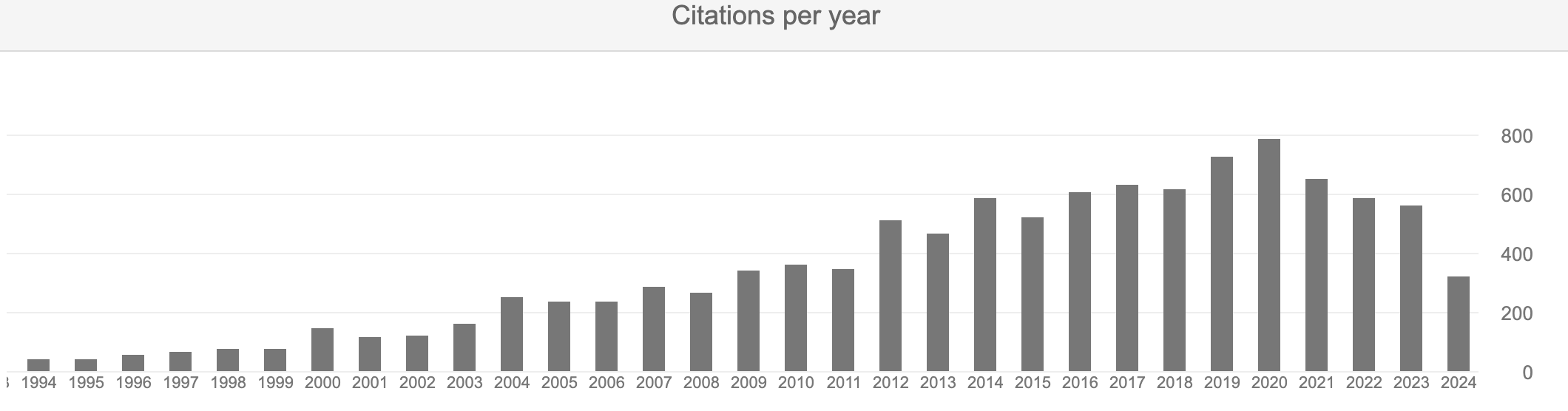
Citational Rise and Fall among Mayanists

by Stephen Houston (Brown University)

“[E]very age is an age of ignorance because the rise of some knowledges is often accompanied by the loss of others” (Burke 2024a:35)

“Ignorance” is an emotive term. It can be a valid description of gaps in knowledge or an accusation against others, those presumed to be, whether justifiably or not, less learned or schooled in the literature of this or that discipline. But who can deny that scholars come and go with the remorseless scything of time? A vade mecum, a body of work, will molder with eventual disuse and disattention; even in life, inevitably, people notice certain writings and then, as the authors depart or diminish in status or relevance, tend to cite them less and less.

Citations have their own history, of course, depending on discipline and person (Grafton 1997). To “footnote”—to cite—offers its own kind of positioning. People being people, there is always a social nexus involved, contingent on those doing the citing and those being cited. This is compounded by what has been called an “ignorance explosion,” i.e., rapid expansions of knowledge without comparable digestion of new ideas and evidence (Lukasiewicz 1974). Such an “explosion,” a surfeit of data, gives ample scope “for each one of us not to know” (Burke 2024a:36; see also Burke 2024b).

Some contributors, for reasons of deep injustice, never get their due, or not enough of it (Burke 2024a:32–33; Hutson 2002; Yan et al. 2024). Others are sent to oblivion, for solid reasons, yet their cases raise inevitable quandaries about referencing sound work by dubious people (Barofsky 2005; Rosenzweig 2020; Souleles 2020). The question becomes, how to acknowledge research, including those from one’s own oeuvre, in ways that are at once ethical and thoughtful (Kennedy and Planudes 2020)? How does one ponder, in the words of Donald Rumsfeld, “known unknowns” yet leave open a window to “unknown unknowns” (Burke 2024a:7–8)? Here may be a divide between overlooked yet detectible facts—some found, alas, by disreputable people—and things truly beyond our ken, the facta that are imperceptible and unconsciously ignored. At stake is the tough question of what creates the conditions for oblivion and obliviousness, the citational decisions that foment the unconscious and conscious forgetting of people and their work.

This is not a purely abstract issue. A recent fusillade against the largest US dig, at Tikal in the late 1950s and early 1960s, accuses it of subservience to “American big business,” in research informed, we are told, by “ineluctable dependencies between security, espionage, international politics, corporations, conservation, and donor economies” (Meskell 2023). A tarnish presumably descends on its many results, still being published 50+ years after fieldwork (e.g., Greene 2024). Are its conclusions or data disallowable once (if) we accept this reductive view? On this point, perhaps, the polemicist Richard Hofstadter would have an opinion.

Most Mayanists are not listening. To judge from widespread citation, they find abiding value in the results of the Tikal project (e.g., Martin 2015, with countless other examples), and are likely to understand that it did not take place in this decade, but a lifetime ago, in another world of funding, staff, labor relations, local and international politics, shifting academic landscapes, logistics, aims, and ideas. Anachronism does not absolve such work of its flaws. In a photographic database, women appear as human scales and helpmeets in the laboratory, allowed to study small things, evidently, and assigned to the quasi-“domestic” sphere of curating objects. Yet, by the standards of the time, there was at least a chance of good intentions and cogent results. Samuel Johnson said it well: “[t]here is nothing so minute or inconsiderable that I would not rather know it than not know it” (Boswell 1830:272).

Still, the biographical arc of citation is merciless. It rises, falls, flits out of view as scholars become notable and then…not. People die, their social networks fray and memory of them fades. This can be monitored, very roughly, with many provisos and constraints, in the Google Ngram viewer. When a few names are inputted, they appear to have different “topographies” of citation in book-based Ngrams. The names here are Gordon Willey, Michael Coe, Linda Schele, and, in self-study, as the instigator of this mischief, the essayist himself.

For much of the mid-century, going into its final quarter, there could be few more prominent scholars than Gordon Willey, the doyen of Maya archaeology and beyond. Courtly, generous, fortunate (and deserving enough) to fill a fulcrum job, Willey received a two-volume festscrift and subsequent, sympathetic evaluations by former students and close colleagues some five years after his death (Fash and Sabloff 2007; Leventhal and Kolata 1983; Vogt and Leventhal 1983). Then there are the Mayanists Michael Coe and Linda Schele, both of inestimable impact on the field (Coe 1998; Houston et al. 2021), with, as a squib at the end, the “boomer” of the bunch, Houston. The result is a set of spline charts over time (Figure 1. X-axis, years; Y-axis, highest point, for Schele in 1999, 0.0000023825%).


Figure 1. Google Ngram views of Gordon R. Willey (1913–2002), Michael D. Coe (1929–2019), Linda Schele (1942–1998), and Stephen Houston (1958–present) (data accessed Aug. 11, 2024).


Graphically, the splines reveal a complexity that is likely to mirror four academic passages to relative oblivion, if not yet there by any means. Gordon Willey’s spline, fashioned from a long life and career, involves a rapid rise, then a relatively constant level, a massif, that corresponds to his time as a professor of Harvard and distinction as an archaeologist (he was hired in 1950 and remained as a senior professor until 1987); what follows is a slow decline, peaking slightly at his death in 2002, heading inexorably down that same slope. Citations of him may, in the future, lean towards histories of archaeology and specific references to Willey’s descriptive monographs on artifacts from various excavations: direct data do not go out of fashion (Willey 1972).

In contrast, Michael Coe’s spline peaks at a lower level, has a bulge towards the end of his time as faculty at Yale (he retired in 1994), but then picks up appreciably, with only slight reduction up until 2022, the latest year in the data. The downward slope has been arrested. Linda Schele’s is the Mount Everest of the group, no ridgeline or plateau here, but it also falls precipitously at her untimely death: does this signal the influence of charisma or an energetic, personal (and personable) presence in media, or her innovative means of scholarly dissemination? Houston’s rises from his first year at graduate school (1980), plateaus at his arrival at Brown (the job-linked leveling noted for others), then picks up with an award and a period of higher productivity.

But a Google Scholar citation diagram, pehaps more accurate and finely tuned, indexes a more gloomy reality, in the statistics beloved of university bean counters (Figure 2): down, down, after 2020, as Covid takes hold, and people seem to cite him less, a pattern appreciable with some other Mayanists too. Is the bloom off studies of Maya glyphs and art, predictive of approaching oblivion, or is this some blip from a singular time? Notably, Tatiana Proskouriakoff, that decisive analyst of Maya history, has a lower Ngram level but one that stays remarkably level up to the present, a plateau merited by extraordinary breakthroughs. Yet individual scandals do, through Ngrams, reveal deliberate forgetting—oblivion—in citational terms. The slight surprise is that, aside from having splines with perceptible rise, individual contributions, this or that article or breakthrough, appear to be indiscernible in most trajectories. As Timothy Beach notes, a further complication is co-authorship, more prevalent in STEM-oriented Mayalogy.

Figure 2. The author in a Google Scholar citational index over time (accessed Aug. 11, 2024).


The end of this story, when scholars no longer “need to be known,” is itself unknowable. Academic careers and the advent of ready searchability indicate incremental declines in citational salience but not to any final disappearance. The human memory has now been decisively if artificially extended, and search engines do not forget. But there are patterns: ridge-like splines reflecting jobs at universities—ones that form graduate students to cite their professors’ work!—vertiginous ones like stratovolcanoes, varied slope angles (steep = rapid fame), and citational plateaus without foreseeable end. They all point, in their totality, to an undeniable truth. Academic figures are not abstractions, but people with distinctive if patterned arcs, as cited by a social nexus that chooses, amidst ever-growing information, to remember them…or to forget.


References

Barofsky, Robert. 2005. Yanomami: The Fierce Controversy and What We Can Learn from It. Berkeley: University of California Press.

Boswell, James. 1830. The Life of Samuel Johnson, LL. D. London: J. Sharpe.

Burke, Peter. 2024a. Ignorance: A Global History. New Haven: Yale University Press.

______. 2024b. Writing a History of Ignorance. Yale University Press Blog.

Coe, Michael D. 2000. Linda Schele (1942–1998). American Anthropologist 102:133–35.

Fash, William, and Jeremy Sabloff. 2007. Gordon R. Willey and American Archaeology: Contemporary Perspectives. Norman: University of Oklahoma Press.

Grafton, Anthony. 1999. The Footnote: A Curious History. Cambridge, MA: Harvard University Press.

Greene, Virginia. 2024. Tikal Report No. 28: The Pottery Figurines of Tikal. Philadelphia: University of Pennsylvania Museum.

Houston, Stephen D., Mary Miller, and Karl Taube. 2021. Michael D. Coe (1929–2019): A Life in the Past. Ancient Mesoamerica 32(1):1–15.

Hutson, Scott R. 2002. Gendered Citation Practices in American Antiquity and Other Archaeology Journals. American Antiquity 67(2):331–342. doi:10.2307/2694570

Kennedy, Rebecca, and “Maximus Planudes.” 2020. An Ethics of Citation. Classics at the Intersection.

Leventhal, Richard M., and Alan L. Kolata (eds.). 1983. Civilization in the Ancient Americas: Essays in Honor of Gordon R. Willey. Albuquerque: Univeresity of New Mexico Press.

Lukasiewicz, Julius. 1974. The Ignorance Explosion. Leonardo 7:159–63.

Martin, Simon. 2015. The Dedication of Temple VI: A Revised Chronology. The PARI Journal 15(3):1–10.

Meskell, Lynn. 2023. Pyramid Schemes: Resurrecting Tikal through the Military-Industrial-Academic Complex. Journal of Field Archaeology48(7):551–62. https://doi.org/10.1080/00934690.2023.2209398

Rosenzweig, Melissa S. 2020. Confronting the Present: Archaeology in 2019. American Anthropologist 122:284–305. https://doi.org/10.1111/aman.13411

Souleles, Daniel. 2020. What to Do with the Predator in your Bibliography? Allegra Lab.

Vogt, Evon Z., and Richard M. Leventhal (eds.). 1983. Prehistoric Settlement Patterns: Essays in Honor of Gordon R. Willey. Norman: University of Oklahoma Press. 

Willey, Gordon R. 1972. The Artifacts of Altar de Sacrificios. Papers of the Peabody Museum of Archeology and Ethnology, 64(1). Cambridge, MA: Harvard University.

Yan, Veroica X., Katherine Muenks, and Marlone D. Henderson. 2024. I Forgot that You Existed: Role of Memory Accessibility in the Gender Citation Gap. American Psychologist. Advance online publication. https://doi.org/10.1037/amp0001299