Our article has just published in the latest issue of Science (Vol. 336 no. 6082 pp. 714-717), co-authored by William Saturno, David Stuart, Anthony Aveni and Franco Rossi.
Article Abstract
Maya astronomical tables are recognized in bark-paper books from the Late Postclassic period (1300 to 1521 C.E.), but Classic period (200 to 900 C.E.) precursors have not been found. In 2011, a small painted room was excavated at the extensive ancient Maya ruins of Xultun, Guatemala, dating to the early 9th century C.E. The walls and ceiling of the room are painted with several human figures. Two walls also display a large number of delicate black, red, and incised hieroglyphs. Many of these hieroglyphs are calendrical in nature and relate astronomical computations, including at least two tables concerning the movement of the Moon, and perhaps Mars and Venus. These apparently represent early astronomical tables and may shed light on the later books.
A great many descriptions of ancient Maya mathematical notation read something like this:
The Maya made use of a base-20 (vigesimal) system with the units of 1, 20, 400, 8,000, 160,000, etc.. To write a number, a scribe would show multiples of these units in a set columnar order, moving down from highest to lowest, and add them accordingly. “32” for example would be written as single dot for 1, representing one unit of 20, above the two bars and two dots for 12, corresponding to the “ones” unit (1×20 + 12×1 = 32). A larger number such as 823 would be written in three places as two dots followed by one dot followed in turn by three dots, standing for the necessary multiples of 400, 20, and 1 respectively (2×400 + 1×20 + 3×1 = 823).
Similar descriptions of Maya math pervade the literature, textbooks and the internet. For example Michael Coe writes in the latest edition of The Maya (p. 232):
Unlike our system adopted from the Hindus, which is decimal and increasing in value from right to left, the Maya was vigesimal and increased from bottom to top in vertical columns. Thus, the first and lowest place has the value of one; the next above it the value of twenty; then 400; and so on. It is immediately apparent that “twenty” would be written with a nought in the lowest place and a dot in the second.
The illustration accompanying this text provides many examples of this purely vigesimal system:
Maya number notation from Coe’s The Maya (8th edition, p. 233)
Maya mathematical notation is described the same way in a number of other influential books widely read in classrooms and seminars, such as The Ancient Maya: New Perspectives (McKillop 2004:277) or the venerable The Ancient Maya (Sharer and Traxler 2006:101). In the latter work, two types of counts are represented (see below) – the purely vigesimal or base-20 count (with units of 1, 20, 400, and 8,000) alongside what’s called the “chronological count” (with units of 1, 20, 360, 7,200). The second is of course the basis for the familiar Long Count system.
Maya number notation as shown in The Ancient Maya (6th edition, p. 101).
A big problem exists with all of these seemingly straightforward descriptions of Maya mathematical notation. As far as I am aware no purely vigesemal place-notation system was ever written this way. It’s true that in Mayan languages numbers are base-20 in their overall structure, just as in most Mesoamerican languages. In Colonial Yukatek, for example, we have familiar terms for these units: k’al (20), bak’ (400), pik (8,000), and so on. However, ancient scribes never represented these units in a columnar place notation system, as is so commonly described in the textbooks. That format was instead always reserved for a for the count of time, in what we know as the Long Count. That system is mostly vigesimal, but it is skewed in one of its units (the Tun, of 360 days) in order to conform as much as possible to the number of days in the solar year (365). To reiterate: the columns of numbers we find in the pages of the Dresden Codex or painted on the walls of Xultun (stay tuned, folks…) are all day counts; the positional notation system was never used for reckoning anything else.
In the ancient inscriptions non-calendrical counts using large numbers are quite rare, mostly found in connection to tribute tallies, such as the counting of bundled cacao beans. But in those settings the scribes always seem to show nice rounded numbers (as in ho’ pik kakaw, “5×8,000 [40,000] cacao beans,” shown in the murals of Bonampak) without all the place units we know from the Long Count. In the Dresden and Madrid codices, counts of food offerings are given as groupings of WINIK (20) signs with accompanying bars and dots for 1-19. In this way a cluster of four such elements (4×20) with 19 writes 96 (See Love 1994:58-59; Stuart, in press).
There is a good deal we still don’t know about the ways the Maya wrote quantities, especially of non-calendrical things. The pattern nonetheless seems clear that the place notation system of the Long Count was restricted to time reckoning, and never applied to the purely vigesimal counting structure we see reflected in Mayan languages. The descriptions of written numbers found in the many texts about the ancient Maya therefore need to be corrected.
Sources Cited:
Coe, Michael. 2011. The Maya (8th edition). Thames and Hudson, New York.
Love, Bruce. 1994. The Paris Codex: Handbook for a Maya Priest. University of Texas Press, Austin.
McKillop, Heather. 2006. The Ancient Maya: New Perspectives. W.W. Norton, New York.
Sharer, Robert, and Loa Traxler. 2005. The Ancient Maya (6th edition). Stanford University Press, Stanford.
Stuart, David. In press. The Varieties of Ancient Maya Numeration and Value. To appear in The Construction of Value in the Ancient World, ed. by J. Papadopolous and G. Urton. Cotsen Institute of Archaeology, UCLA, Los Angeles.
Here’s a link to the new website for MAM: Mayas for Ancient Mayan, an important effort to bring ancient Maya literature to indigenous communities in Mexico, Guatemala and Belize.
Mayas for Ancient Mayan (MAM) supports indigenous Mayas who are thirsting to learn the ancient hieroglyphic writing and the calendar. With financial aid from MAM, our Maya colleagues attend workshops and conferences in the US, Europe, and Latin America to learn the latest advances in decipherment of the ancient writing. Combining these advances with ancient teachings from their own elders, our colleagues spread this knowledge in workshops and classes to the Mayan-speaking communities. MAM supports these efforts.
In an earlier post on Maya Decipherment I speculated that the lengthy text of Tikal’s Temple of the Inscriptions (or Temple VI, dedicated in 766 AD) refers in part to an early building episode of the temple, as well as to the initial construction of the Mendez Causeway — the ceremonial road leading to the Temple of the Inscriptions from Tikal’s central “downtown.” The specific dates from that text are:
I suspect that these historical episodes in 527 AD involve the construction and dedication of an early temple dedicated to White Owl Jaguar. The final episode in this string of related dates says it is the jatz’ bih-tuun, “the road-striking,” or “the pavement striking.” This is an odd phrase found also at Naranjo (on Altar 2), where Nikolai Grube has suggested it refers to the construction of architectural spaces. One wonders of it could be more specifically referencing the building of causeways (bih-tuun, “road of stone”), an attractive interpretation given that Temple of the Inscriptions lies at the end of a very long and important ceremonial road, the Mendez Causeway. Archaeological probing in and around the complex would be needed to make sure, but I suspect that the events of 527 are key episodes in the architectural history of the Temple of the Inscriptions.
Not long ago, during December’s Maya Field Workshop at Tikal, I came upon this interesting tidbit on the Mendez Causeway from William Coe’s guidebook to the site:
“With a length of about three-fifths of a mile and an average width of 200 feet, this causeway originates at the east side of the East Plaza (behind Temple I) and runs almost straight to the Temple of the Inscriptions. Close to the East Plaza the Late Classic causeway with its parapets overlies an earlier causeway without side parapets. The latter may be Early Classic” (Coe 1967:87).
So, there is indeed as early phase of the Mendez Causeway. It seems natural to wonder if this dates to 527, with the overlying later version corresponding to refurbishment of the causeway and temple some 240 years later.
Reference Cited:
Coe, WIlliam R. 1967. Tikal: A Handbook of the Ancient Maya Ruins. The University Museum, Philadelphia.
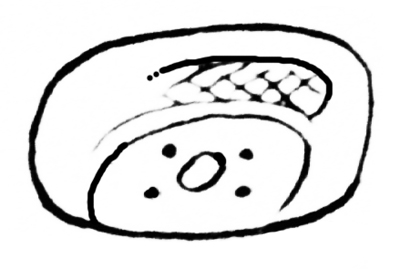
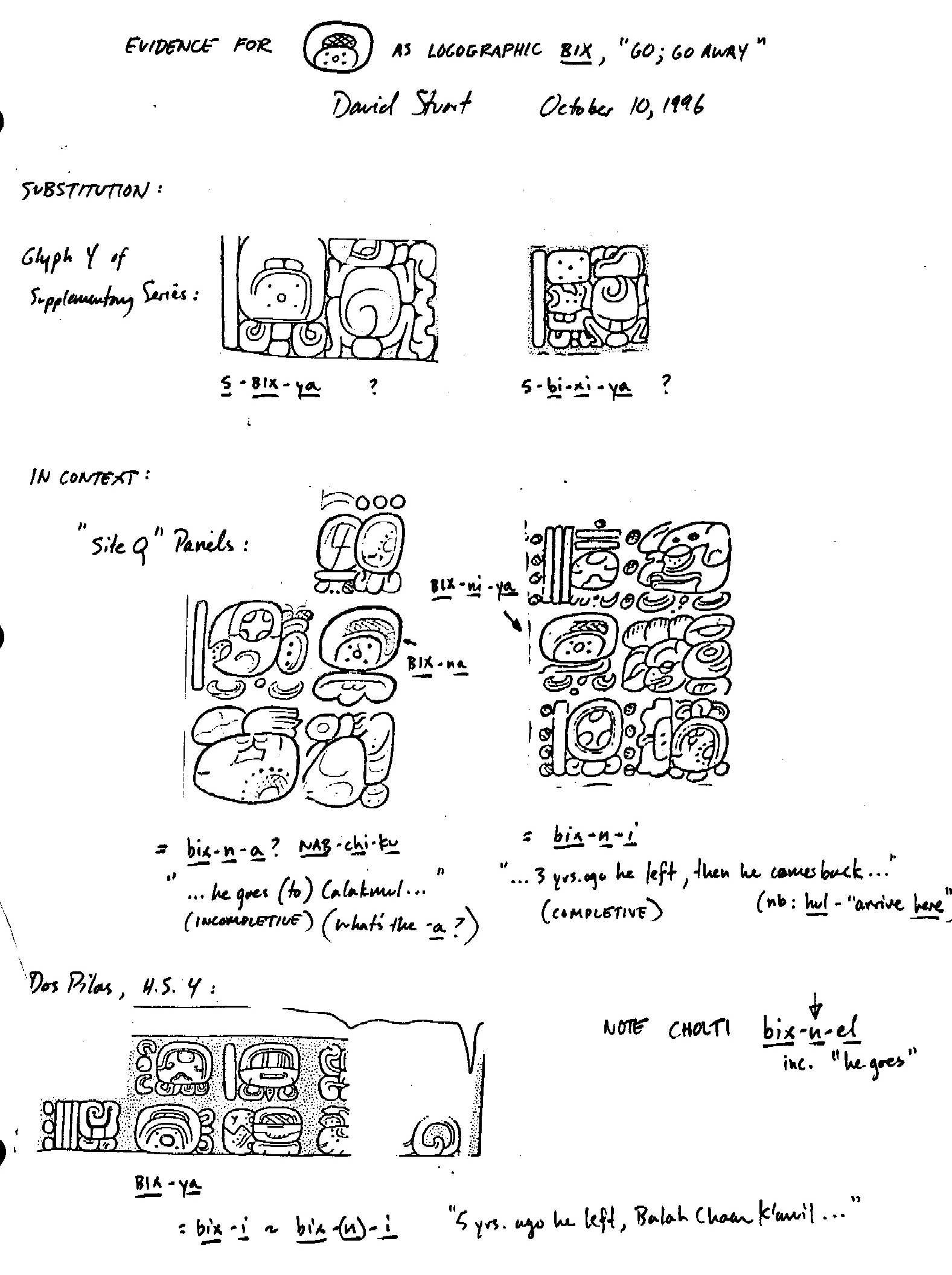
Back in 1996 I made notes about an interesting substitution set that pointed to a reading BIX for a logogram shown here, which makes an appearance in a few inscriptions from Yaxchilan, La Corona, Dos Pilas, Coba, as well as a few others. This value may well have been noted by others back around the same time, if not before, but I thought I would post my old hand-written note summarizing the evidence (having just now found them in an old notebook).
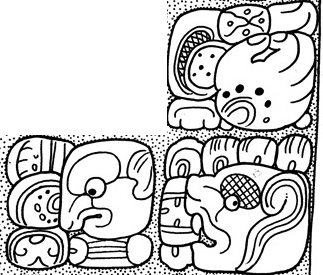
The sign was used to write the intransitive verb bix, “to go,” in a small variety of settings. This verb root can be traced historically to proto-Ch’olan *bix (Kaufman and Norman 1980) and in ancient texts it appears on Dos Pilas HS 4 (see page bottom) as BIX-ya, for bix-iiy, “he went” (in reference to the fleeing of the local ruler Bahlaj Chan K’awiil from Dos Pilas). Spelled BIX-ya or bi-xi-ya, the same verb was used in temporal expressions ho’ bix-iiy, “five days ago” or wuk bix-iiy, “seven days ago” (see top examples on page below). A variant form of this verb is bix-Vn, “to go, go away,” which appears in Colonial Ch’olti’ and in the glyphs as well. Several examples occur in the texts of La Corona (spelled BIX-na 0r, for the compl,tive, BIX-ni-ya), where they refer to the journeys of the young noble K’inich ? Yook from his home to Calakmul (Chihknahb). A related example turned up long after I wrote those original old notes, on Panel 1 from La Corona (at right), discovered in 2005 by Marcello Canuto. There we read bix-Vn chihknahb, “he goes to Chihknahb” (the same expression appears on Panel 2, but with a different date — see “Site Q” examples illustrated at the middle of the page).
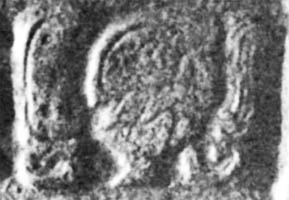
My favorite example of these “go” verbs comes from Altar de Sacrificios, where on Panel 2 we have bi-xi-ni-ya, for bix-Vn-iiy, “he went away.” Rather than referring to a journey in the real world, this is a citation of a local ruler’s death (cited in more conventional terms on Stela 4, an associated inscription).
I’m as yet unsure what if any semantic distinction existed between between the verbs bix and bix-Vn, and they may just be regional variants. The bix root is likely based on the noun *bih, “road,” and I find it interesting that this etymology is graphically reflected in the logogram sign itself, which incorporates an infixed BIH/bi element.
Here are my old scribbles on this stuff from 1996:


You must be logged in to post a comment.